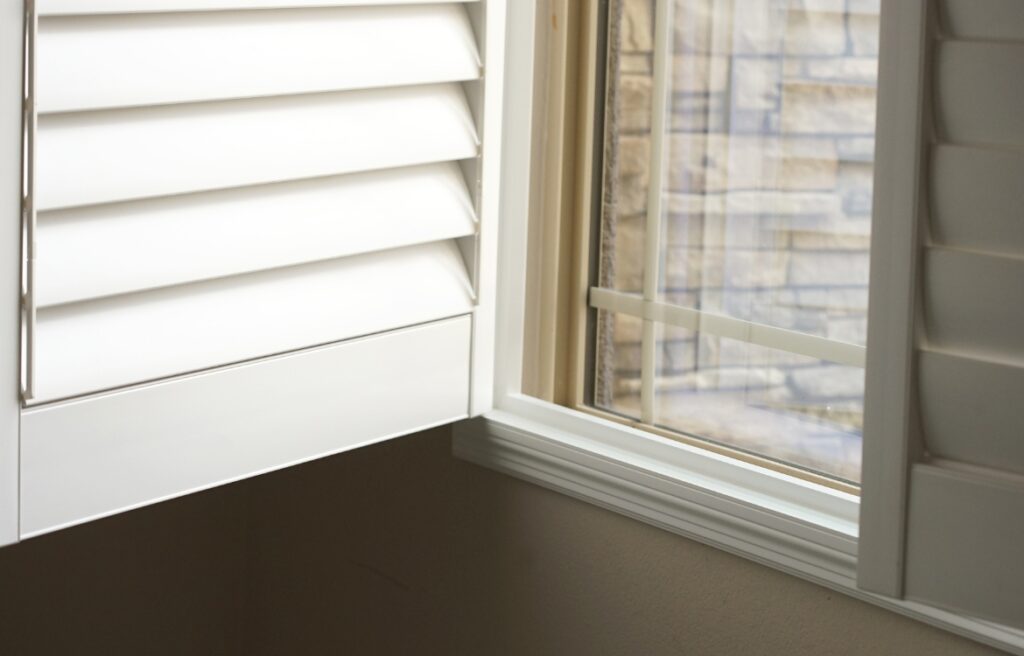

Plantation shutters that won’t close fully are usually affected by alignment faults, loose hinges, or obstructions along the frame. In some cases, moisture or worn tension screws can also stop the blades from moving freely.
To fix the problem, start with simple checks. Remove any debris, inspect the hinges, and tighten or adjust the screws holding the panels. If the shutters still stop halfway, a professional inspection can identify worn parts or frame movement that needs correction.
Addressing these issues early prevents further wear and keeps the shutters closing smoothly, maintaining both their appearance and performance.
Common Causes of Halfway Closing
When plantation shutters fail to close all the way, several mechanical or environmental factors may be responsible. Identifying the cause helps determine whether the issue can be fixed through basic maintenance or if it requires professional adjustment.
Common causes include:
- Loose or worn hinges that shift the panel out of position
- Dust or debris caught between the blades or frame
- Warping from humidity or temperature changes
- Misaligned panels caused by frequent movement
- Overtightened or loose tension screws restricting blade rotation
Each of these can limit movement and cause the panels to stop halfway. Cleaning, tightening, or realigning the affected parts often restores normal operation.

Checking Alignment and Hinges
Misaligned panels and loose hinges are common reasons plantation shutters stop halfway. When hinges pull away from the frame or shift out of position, the panels can rub or catch before closing completely.
To check alignment:
- Open the shutters and inspect the spacing between each panel
- Look for uneven gaps or scraping along the frame
- Tighten any loose hinge screws using a screwdriver
- Ensure all hinges sit flush and evenly along the frame
If the panels still don’t move smoothly, remove light debris around the hinges and confirm the frame is square within the window opening. In older installations, worn or bent hinges may need replacement to restore even movement.
Adjusting Tension Screws and Blades
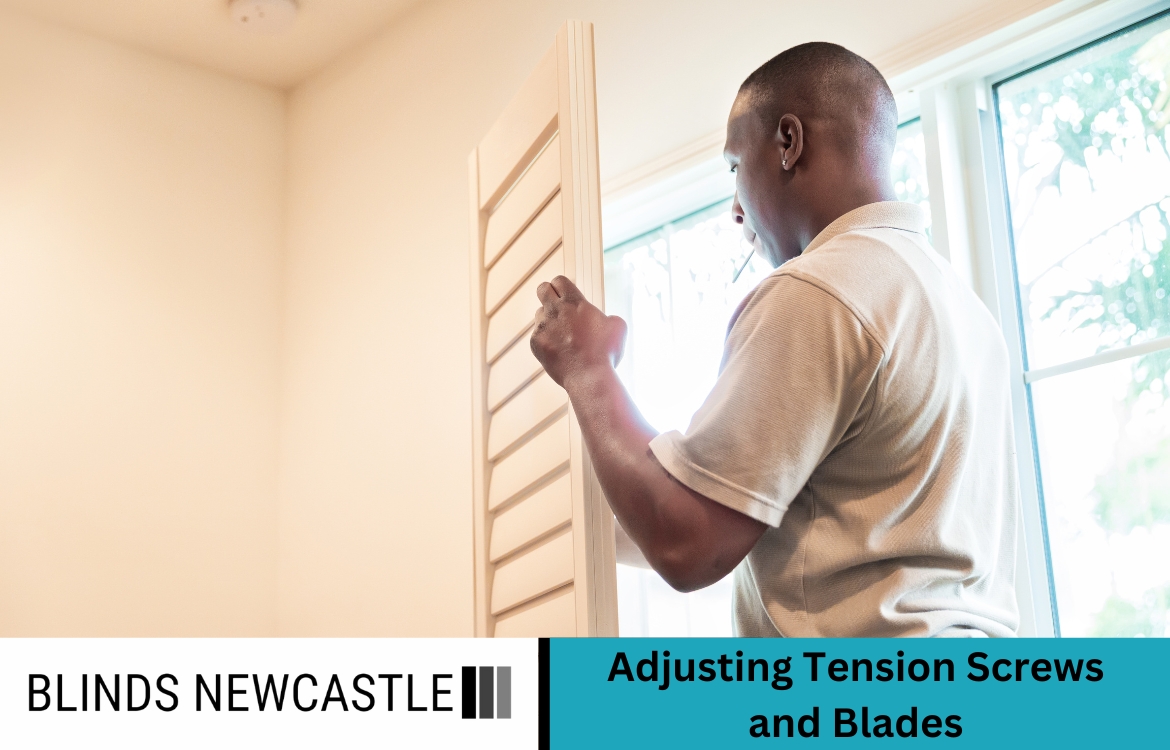
Tension screws control how freely the shutter blades move. If they become too tight, the blades may stop halfway or feel stiff when closing. If too loose, they may not stay in position. Adjusting these screws helps restore balance and smooth operation.
To make adjustments:
- Locate the tension screws on the sides of each panel
- Turn them gently in small increments
- Tighten slightly if the blades sag or loosen if they feel stuck
- Test the movement after each adjustment to avoid overtightening
Small corrections often make a noticeable difference in how smoothly the blades close. For shutters with older mechanisms or signs of wear, the tension system may need replacement to maintain consistent control.
Environmental and Material Factors
Changes in temperature or humidity can cause timber plantation shutters to expand or contract, affecting how smoothly they close. In humid areas, moisture can make the panels swell slightly, leading to rubbing or sticking when shutting.
To manage these effects:
- Increase ventilation in rooms with high humidity
- Wipe shutters with a dry cloth to remove moisture buildup
- Avoid using excess water during cleaning
- Use a dehumidifier in bathrooms or kitchens where moisture is constant
If swelling continues, consider upgrading to moisture-resistant materials such as aluminium or PVC shutters. These options maintain their shape and function better in changing weather conditions, reducing the risk of panels sticking halfway.
When to Call a Professional
If your shutters still stop halfway after cleaning, alignment checks, and tension adjustments, it may be time to contact a qualified technician. Some problems involve internal frame movement or hidden damage that requires specialised tools to correct.
A qualified technician can:
- Inspect and realign warped frames
- Replace damaged hinges or blade connectors
- Refit panels to ensure even movement
- Identify deeper structural issues affecting operation
Attempting major repairs without the proper equipment can cause further damage or void the product warranty. Professional servicing ensures the shutters are repaired correctly and continue to perform smoothly for years.

Preventive Care Tips
Keeping plantation shutters in good condition reduces the chance of them getting stuck or stopping halfway. Routine maintenance helps maintain smooth movement and extends their overall lifespan.
Here are some effective care tips:
- Dust shutters weekly using a soft cloth or vacuum brush
- Check hinge screws and tension settings every few months
- Avoid slamming panels closed or forcing tight blades
- Keep windows well ventilated to prevent moisture buildup
- Schedule periodic inspections for older shutter systems
These small steps help prevent wear and ensure reliable performance. Regular attention to hinges, frames, and blade tension keeps plantation shutters working smoothly throughout the year.
Professional Plantation Shutter Repairs
When plantation shutters stop halfway or fail to close fully, prompt inspection prevents further damage and keeps them working as intended. Even small issues like frame shifts or worn fittings can affect performance if left unaddressed.
At Blinds Newcastle, we specialise in repairing and servicing plantation shutters across a range of materials and styles. Our team inspects, adjusts, and replaces faulty components to restore smooth, even movement.
If your shutters are sticking, uneven, or showing signs of wear, contact us for reliable repair and maintenance solutions. We provide practical support that helps extend the life of your shutters and keeps them looking their best.
FAQs
Can window frame movement affect how shutters close?
Yes. Over time, small shifts in the window frame from settling or temperature changes can alter spacing and restrict full closure. A technician can realign the frame to restore smooth movement.
Is it safe to adjust plantation shutters myself?
Minor adjustments like tightening screws are fine, but complex repairs involving the frame or internal pivots should be handled by a professional to avoid damage.
Do older shutters require different maintenance?
Older shutter models may use dated fittings or materials that loosen over time. Regular inspections help identify parts that need replacement to maintain proper balance.
Are there signs that my shutters are nearing the end of their service life?
Frequent jamming, visible cracks, or panels that no longer align evenly are signs the shutters may be wearing out. Upgrading to a modern design can improve both performance and durability.
What is the best material for long-lasting plantation shutters?
Aluminium and PVC shutters offer strong resistance to humidity, making them suitable for areas exposed to changing weather or moisture.